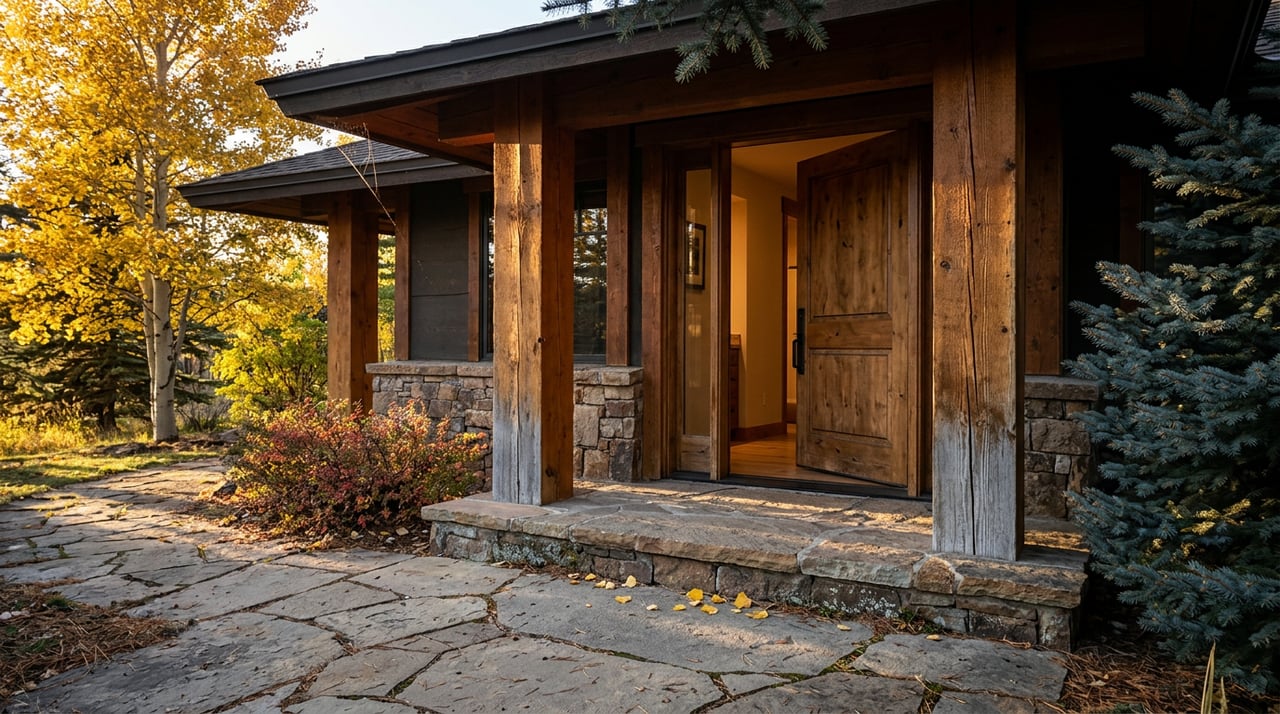
On June 23, 2026, the Aspen City Council spent part of a Tuesday meeting talking about a small miner's cabin on West Smuggler Street. The building isn't grand. It's the kind of structure most buyers would tear down without a second look. But the council wasn't debating whether to save it. It was approving Ordinance 12, a measure that lets the owners keep the cabin standing, build a duplex behind it, and walk away with something the house next door will never have: a certificate they can sell.
That certificate is a Transferable Development Right, and it's the reason Aspen's historic preservation rules read like a burden on paper but often price out as an asset in practice. If you're comparing a landmarked property against a non-historic one in the same neighborhood and can't figure out why the numbers don't line up the way the square footage suggests, this is usually why.
What a TDR Actually Buys
Under Aspen's Land Use Code, Chapter 26.535, adopted in 2003, an owner of a designated historic landmark can permanently restrict the property's floor area below what zoning would otherwise allow. In exchange, the city issues one TDR certificate for every 250 square feet of floor area given up. That certificate isn't tied to the property anymore. It can be sold to a different owner anywhere in Aspen who wants to add floor area past their own baseline, whether that's a new penthouse in the commercial core or an addition on a lot that's already built to its legal limit.
Pitkin County runs a separate, older version of the same idea. Its program dates to 1994 and is built around the Rural/Remote zone district. Backcountry landowners give up the right to build on land near wilderness, wildlife corridors, or old mining claims, and in exchange they get a certificate worth 2,500 square feet of floor area, sellable to developers working closer to town.
The two programs sound like the same tool. They are not. A City Historic TDR is a 250-square-foot unit. A County TDR is a 2,500-square-foot unit, ten times larger. And under the city's code, that difference runs one direction only. City Historic TDRs can sometimes be exported to county receiving sites if the county's rules allow it, but county backcountry TDRs cannot be imported onto lots inside city limits. Aspen guards its urban core against rural-density transfers, full stop.
That distinction matters more than it sounds like it should, because the two certificates trade at wildly different rates once you do the math per square foot.
The Math Nobody Puts on the Listing Sheet
In 2026, County TDR certificates are trading in the $650,000 to $800,000 range. City Historic TDRs, the smaller 250-square-foot units, are trading around $725,000 to $750,000. At first glance, those numbers look close. They are not close at all once you divide by the square footage each certificate actually delivers.
A County TDR at $800,000 for 2,500 square feet works out to roughly $320 per square foot of added floor area. A City Historic TDR at $750,000 for 250 square feet works out to roughly $3,000 per square foot. Buying your way past the zoning cap on an in-town historic lot costs close to ten times more per square foot than buying your way past it on a backcountry-adjacent parcel. Anyone comparing the two programs by sticker price alone is comparing the wrong number.
That gap is the mechanism worth understanding before you write an offer on, or against, a landmarked property. The restriction isn't priced like a discount. It's priced like a premium, denominated in the smallest, most expensive unit the city sells.
The Price That Swallowed a Decade
The current numbers only make sense against where they came from.
| Period | Approximate TDR Price | What Was Happening |
|---|---|---|
| 2014 (City Historic TDRs) | $175,000–$240,000 | Program still thin; 64 certificates issued, 24 landed |
| 2020–2021 (County TDRs) | Around $360,000 | Steady pre-pandemic climb |
| December 7, 2021 (record County sale) | $1.8 million | WW Colorado Holdings LLC, certificate traced to a mining claim near Grizzly Reservoir |
| 2021–2022 (broader peak range) | $2.0–$2.5 million | Post-pandemic luxury frenzy, certificate shortage |
| 2026 (County TDRs) | $650,000–$800,000+ | Correction after new house-size caps |
| 2026 (City Historic TDRs) | $725,000–$750,000 | Down from peak, still the pricier unit per square foot |
"The big story of the year is the escalating value of what TDRs are selling for," Suzanne Wolff, assistant director of Pitkin County's planning department, told county commissioners in late 2021, watching the top sale climb from $1.5 million to $1.8 million in a matter of weeks. A local TDR broker put it more bluntly at the time, describing the county's own zoning discussions as having "created its own wildfire" under demand.
That fire burned itself out. Pitkin County capped house sizes at 8,750 square feet inside the Urban Growth Boundary and 9,250 square feet outside it, and added a four-tier review process that makes homes over 5,750 square feet considerably harder to build. Builders who once needed to stack two or three County TDRs onto a single mega-mansion suddenly had far less reason to buy them. The buyer pool shrank, and the price followed it down, from a $2 million-plus ceiling to something closer to $700,000.
TDR certificates don't expire once issued. They're irrevocable and stay valid until they're used or formally extinguished, which means owners who bought at the top of the 2021-2022 run either sold into the correction or are still holding certificates worth roughly a third of what they paid.
What the Trade Actually Looks Like
The former Pitkin County Library at 120 East Main Street shows the exchange in full. The building had already sat vacant as a library since 1992, more recently housing Design Workshop and other tenants, but its opening decades earlier had drawn Walter Cronkite and Colorado Governor John Love. When the city moved to grant it AspenModern historic status, permanently limiting what could be built there, the owners received ten TDR certificates in return, along with fee waivers, ten years of vested development rights, and permission for rooftop mechanical equipment that would let the site eventually operate as a restaurant. The deal also allowed two deed-restricted affordable housing units, just over 2,400 square feet combined, to be built behind the landmark under the city's resident-occupied housing category.
During that hearing, Aspen resident Charlie Tarver told the council the building would be "something you can never get back" if it went to the free market. The city's calculation was that the certificates, the housing allowance, and the vested rights were worth more to the owners than an unrestricted redevelopment would have been. As of a 2023 city report, Aspen's historic preservation program covers roughly 305 designated landmark sites, about 50 of them under the newer AspenModern category for mid-century buildings, each one a candidate for the same kind of trade.
What It Means If You're Looking in the Historic Core
In the West End and along the Main Street Historic District, most of the building stock falls under Historic Preservation Commission review, which caps floor area against lot size regardless of what a buyer is willing to spend. You cannot out-budget the zoning cap on a landmarked lot. What you can do is compete on what the cap doesn't touch, interior finish, below-grade square footage, and mechanical systems, which is why renovated historic homes in these districts often show up with disproportionately high per-square-foot pricing relative to their footprint. The house isn't bigger. The build quality inside the fixed envelope is what buyers are actually paying for.
It also means the presence or absence of an attached TDR, or the unused floor-area potential a historic property still has left to convert into one, can move a valuation by six or seven figures in either direction, and that number rarely shows up anywhere on a standard listing sheet.
Before You Write an Offer
A few things worth confirming before you get too far into a historic property, or a lot you're hoping will receive a TDR:
- Check title and the city's historic preservation records for any TDR certificates already issued or extinguished against the address.
- Confirm how much unused floor area the property actually has left under current zoning. You cannot get TDR credit for space that's already built.
- Identify which program applies. City Historic TDRs and County backcountry TDRs are not interchangeable, and a County certificate cannot land inside city limits.
- Verify the receiving site qualifies under the zone map in Chapter 26.710. Not every lot in Aspen is eligible to accept a certificate.
- Get more than one price quote. TDRs don't trade on the MLS or any public exchange, and most sales happen off-market between private parties.
A Few Questions Worth Asking
What's the real difference between a City TDR and a County TDR? Size and origin. A City Historic TDR comes from a landmarked property inside Aspen and delivers 250 square feet. A County TDR comes from a backcountry parcel and delivers 2,500 square feet. They trade at different price points and aren't freely swappable between programs.
Do TDR certificates expire? No. Once issued, a TDR certificate is irrevocable and stays valid indefinitely until it's used on a receiving site or formally extinguished.
Why did TDR prices fall so much after 2022? Pitkin County capped maximum house sizes and added a tougher, multi-tier review process for larger homes. That reduced the number of buyers who needed to stack multiple certificates to build at scale, and prices came down with demand.
If you're weighing a historic property in Aspen, whether you're the one preserving it or the one hoping to land a certificate on your own lot, the due diligence here isn't optional. It's the difference between a valuation that holds up and one that falls apart at closing. Lindsey Lane Bush has spent years underwriting exactly this kind of Aspen-specific complexity for buyers and sellers who need the analytics done right the first time. Schedule a free consultation to talk through what a specific property's development rights are actually worth before you make a move.